The Digital Athlete | Part 4 | 4 min read
7 Things Basketball Players Should Know Before Using AI to Train Smarter
How basketball players can use AI before and after workouts to plan training, understand movements, review performance and know when human coaching still matters.
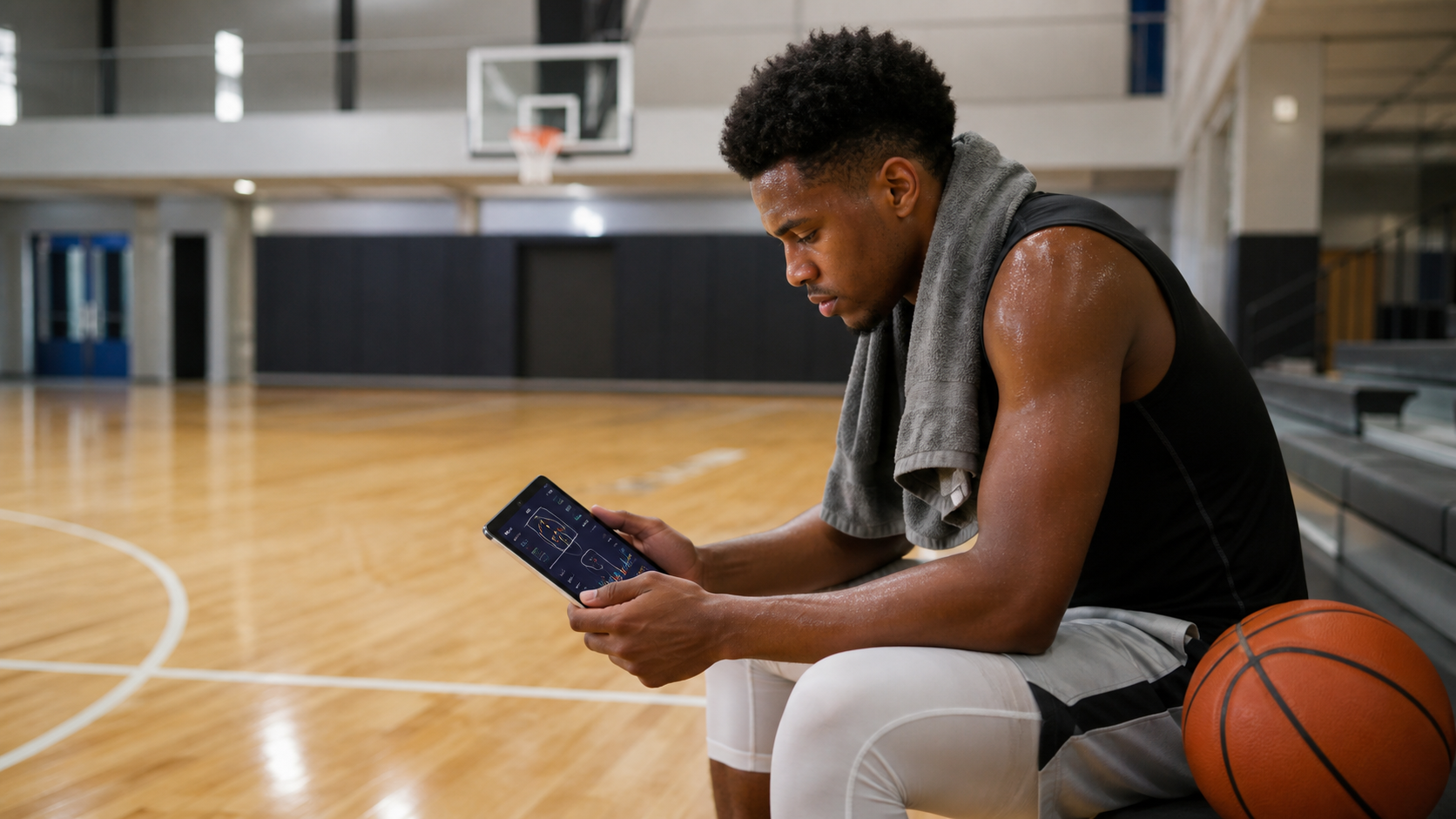
A practical guide for basketball players using AI on and off the court, especially before and after workouts, to plan training, understand movements, review performance and know when human coaching still matters.
Part 4 of The Digital Athlete series
Cover image: AI-generated using ChatGPT for illustrative purposes.
When I first asked ChatGPT for basketball training advice, the answers were useful, but generic.
They became much better when I started explaining who I actually was: my height, weight, playing style, strengths, weaknesses, favourite players and what I wanted to improve. Instead of asking, "How do I jump higher?" I could ask about my penultimate step, takeoff mechanics or how an explosive player should structure a workout.
That changed how I think about AI basketball training. I do not treat AI like a coach with every answer. I treat it like a training assistant.
1. Give AI Context Before Asking for Advice
If you want to know how to use AI for basketball training, start by giving it useful context.
Tell it your playing style, goals, available equipment, recent training and the skill you are working on. You can also provide workout notes, screenshots or clips where the tool supports them.
AI cannot personalize what you do not tell it.
2. Ask AI to Explain Movements, Not Just Give Drills
I sometimes use ChatGPT to understand movements I am trying to improve.
For example, instead of asking for five dunk drills, I can ask what the penultimate step does, how arm swing affects takeoff or what I should watch for when reviewing my own jump.
That helps me understand the why behind the drill.
3. Give It Evidence From Your Actual Game
This connects directly to my first Digital Athlete article, Stop Guessing. Start Tracking..
AI becomes more useful when I give it real information: shooting results, workout notes, things I struggled with or patterns I noticed in my game.
A 2025 review of artificial intelligence in sport describes AI applications in performance enhancement, biomechanics, health monitoring and coaching. The important part is that useful analysis still depends on useful data.
4. Use AI Before and After Training, Not Instead of Training
Before a workout, AI can help me organize a session or understand a movement.
Afterward, I can use it to review notes and decide what deserves attention next.
During training, however, I need to play basketball.
The goal is not to become better at prompting. It is to become better at basketball.
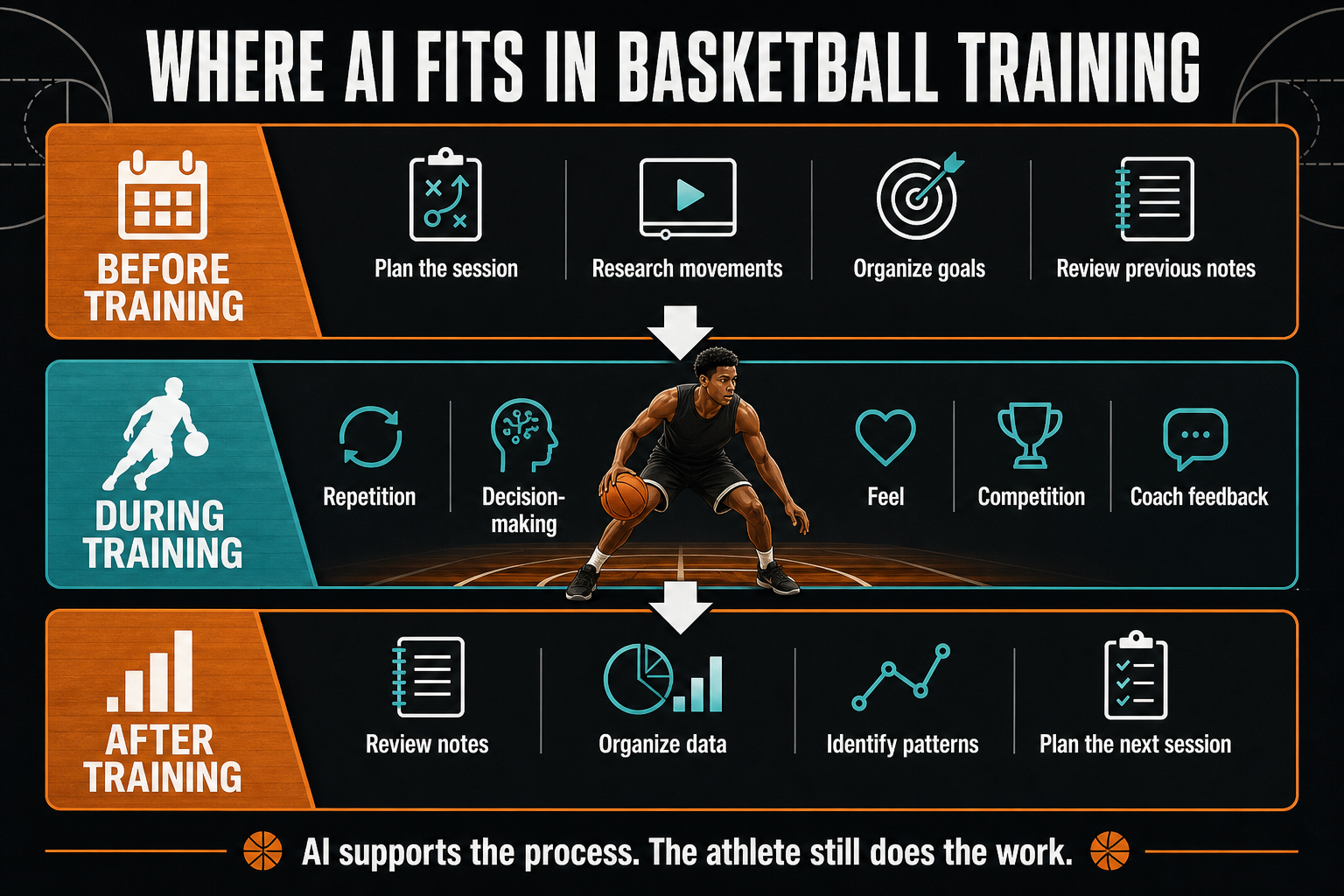
Infographic concept by Eformeh Wisdom.
5. Do Not Blindly Follow an AI Workout
AI can produce convincing advice and still miss context.
A recent study evaluating ChatGPT-generated training plans found that the plans were useful for simpler training structures but needed human supervision for more complex intensity and periodization decisions.
That is why I treat an AI-generated workout as a starting point, not an instruction sheet I must follow exactly.
6. Know When a Human Matters More
A coach can see things AI may not fully understand: timing, effort, decision-making, body language and how you react in real situations.
The same caution matters even more with pain, injuries, rehabilitation or return-to-play decisions. Those questions belong with qualified health professionals.
Research on LLM-based exercise coaching is still developing. A 2025 scoping review found promising applications but also highlighted the need for stronger safety and evaluation standards.
7. Use AI to Build Your Game, Not Someone Else's
In Blog 3, I wrote about training your game instead of copying your favourite player.
AI should follow the same rule.
Instead of asking, "Build me Shai Gilgeous-Alexander's workout," I would rather say: "I like Shai's pace and deceleration. How can I work on those qualities while keeping my own explosive playing style?"
That question keeps the athlete at the centre.
AI can help me organize information, understand concepts and think more clearly about training. But I still have to collect the data, make decisions and do the work.
Track your game. Understand your game. Train your game. Then use AI to support it, not define it.