The Digital Athlete | Part 2 | 4 min read
How Do You Choose the Right Basketball Shoe? A Digital Athlete's Guide to Fit, Performance and Playing Style
A practical guide for basketball players choosing shoes based on fit, movement style, court surface and personal performance needs, not hype.
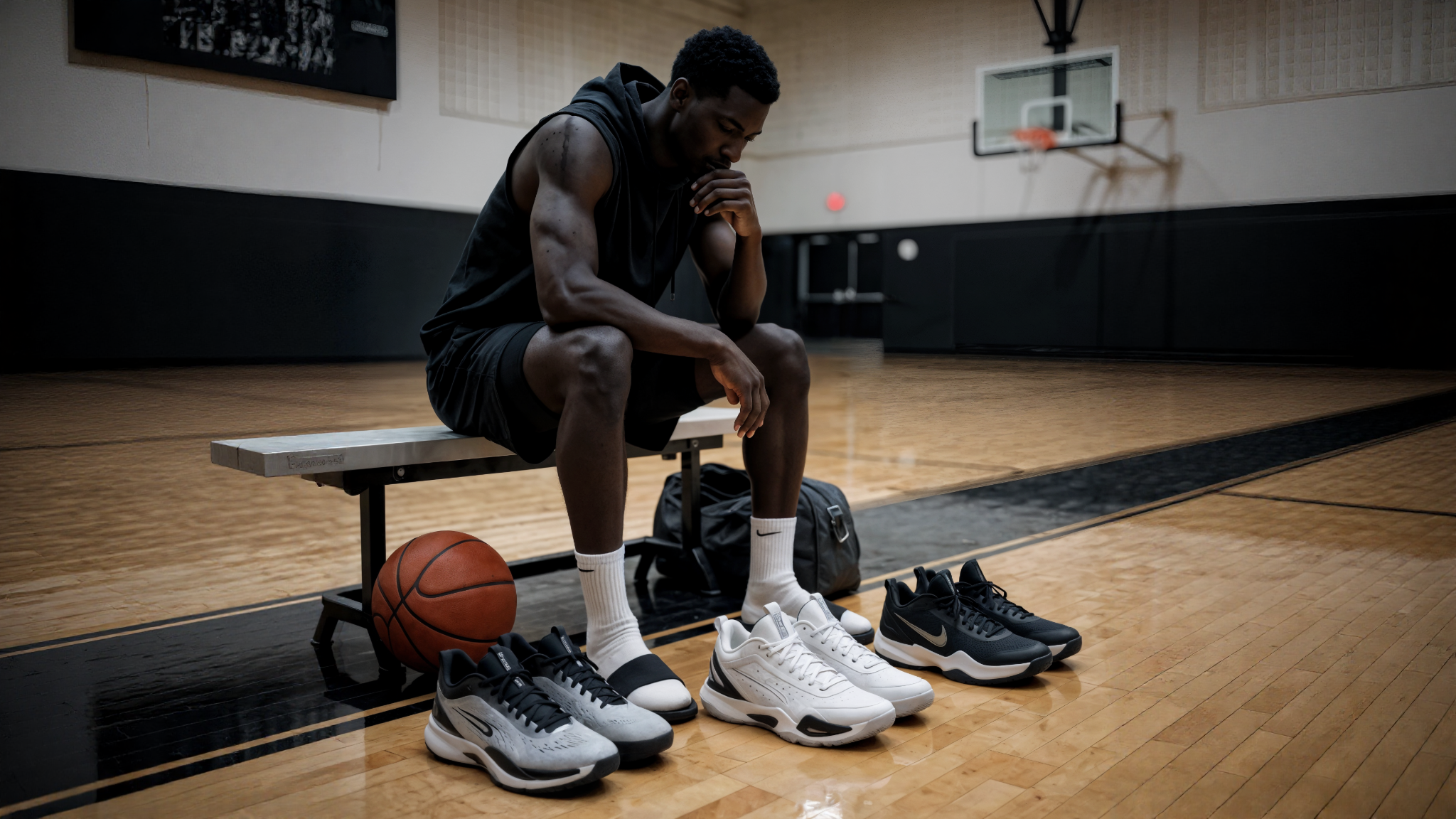
A practical guide for basketball players choosing shoes before their next purchase, whether they play indoors or outdoors, based on fit, movement and performance.
Have you ever bought a basketball shoe mainly because your favourite player wore it?
I have.
For a long time, popularity, design and online hype influenced my choices. Some shoes worked, but others never felt right. As an explosive player who also depends on changes of pace and hard stops, I eventually realized I was choosing shoes for someone else's game.
I have also dealt with recurring ankle and knee discomfort. I cannot say footwear caused those problems because injuries usually involve several factors. However, those experiences pushed me to ask a better question: What do I actually need from a basketball shoe based on my body and playing style?
Cover image: AI-generated using ChatGPT for illustrative purposes.
Start With How You Actually Play
Learning how to choose basketball shoes begins with understanding your movement, not just your position.
Two guards can need very different shoes. One may rely on sharp cuts, while another attacks the rim and needs more impact comfort. According to a systematic review published in Sports Biomechanics, cushioning, traction, collar height, stiffness and weight can influence stability and basketball movement (Lam et al., 2020).
Before shopping, ask:
- Do I change direction often?
- Do I jump and land repeatedly?
- Do I prefer cushioning or court feel?
- Do I mostly play indoors or outdoors?
- Do I need a wider or more secure fit?
These questions are more useful than searching for one universal "best" shoe.
What My Current Shoes Taught Me
My current shoes helped me understand that one pair does not have to solve every problem.
The Adidas D.O.N. Issue 7 is the shoe I use most often because it gives me the balance I personally need for explosiveness, changes of pace and quick direction changes. When I want a lighter feeling for speed-focused sessions, I sometimes use the Nike Ja 3. On days when I want a more rigid and stable platform, I may choose the Harden Vol. 9.
That does not mean these are the best choices for every player. They simply match different parts of my own game. The lesson is to identify the performance qualities you need first, then compare shoes against those needs instead of buying based on popularity.
How Should Basketball Shoes Fit?
A shoe can have excellent technology and still be wrong if the fit is poor. Your heel should feel secure, your foot should not slide during cuts and your toes should have reasonable space. Wear your usual basketball socks and test stops, side steps and small jumps, not just walking.
Research involving basketball athletes has also found that highly cushioned shoes may reduce certain landing load rates, especially when players are fatigued (Wang et al., 2021). Still, more cushioning is not automatically better. Some players prefer a lower setup because it helps them feel more connected to the floor.
Indoor vs. Outdoor Basketball Shoes
The court surface matters too.
Outdoor concrete can wear down soft rubber and shallow tread quickly. Outdoor players may need durable outsoles, while indoor players may prioritize traction and court feel.
If possible, keep separate indoor and outdoor pairs. This can help your indoor shoes last longer.
Shoe height should not be treated as guaranteed ankle protection either. A randomized study comparing high-top and low-top basketball shoes found no simple injury-prevention advantage based only on collar height (Barrett et al., 1993).
Stop Buying for the Hype
The right basketball shoe is not automatically the newest, most expensive or most popular pair.
In my first Digital Athlete blog, I wrote about why athletes should stop guessing and start tracking. Footwear decisions should follow the same idea: track comfort, traction, fit, stability and how your body feels after training.
Before buying your next pair, write down your top three performance needs and compare every option against them.
What matters most in your basketball shoes: traction, cushioning, court feel, stability or durability?